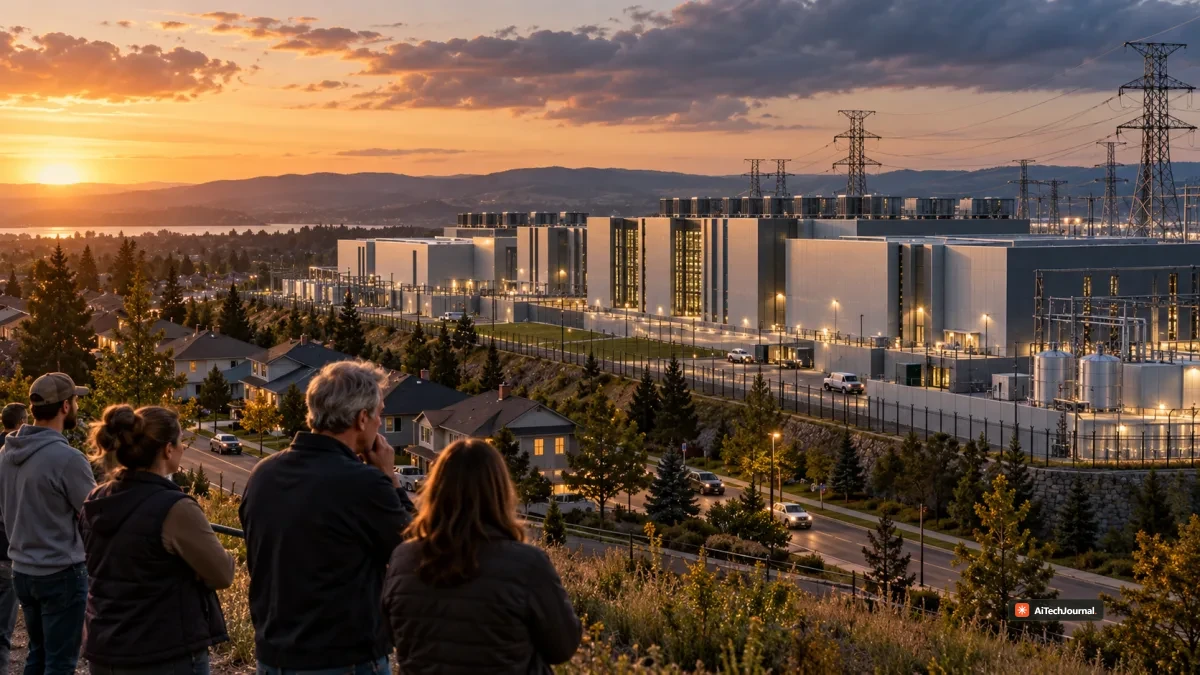
A new federal Opportunity Zone framework taking effect in 2027 could make some rural data-center investments more tax-advantaged, adding a potentially important site-selection factor for an industry already weighing land, power, water and infrastructure costs.
The change comes from the Opportunity Zone program made permanent by the One Big Beautiful Bill Act. Under the revised framework, a new set of qualifying census tracts begins operating on January 1, 2027, with designations refreshed on 10-year cycles. The rules also create enhanced treatment for investments made through Qualified Rural Opportunity Funds.
The headline rural benefit is a 30% basis step-up after a qualifying investment has been held for five years. In practical terms, that increase in tax basis can reduce the portion of deferred capital gain that is ultimately subject to tax, making the rural version of the program more favorable than the standard Opportunity Zone treatment.
The Department of Housing and Urban Development’s Opportunity Zone comparison lists the 30% five-year step-up for Qualified Rural Opportunity Fund investments and confirms that the permanent program begins in 2027. The program remains a place-based investment incentive rather than a tax credit written specifically for artificial intelligence or data centers.
Data centers matter because their economics can fit the structure unusually well. Large facilities require substantial upfront investment in land, buildings, electrical infrastructure, cooling and other long-lived assets. Legal and tax advisers have pointed out that the industry’s long planning and operating horizons can align with Opportunity Zone holding periods, particularly when projects are built in qualifying rural areas.
That could make the new rules relevant to developers, infrastructure investors, landlords and operators deciding between otherwise competitive sites. If two locations offer similar access to power and network infrastructure, a qualifying Opportunity Zone structure could improve the after-tax economics of one of them. The effect would depend on the investor, the gain being reinvested, the fund structure and the project’s compliance with the program.
It is therefore misleading to describe the law as an automatic federal tax break for any company that puts a data center in rural America. Rural geography alone is not enough. The investment must be tied to a designated Opportunity Zone and meet rules governing qualified funds, property and holding periods. The new round of zones also uses tighter low-income criteria than the original program, so not every rural census tract will qualify.
The distinction is especially important when discussing large technology companies. The rules may create an incentive that hyperscale data-center developers or their investors could use, but eligibility does not show that Amazon, Google, Microsoft, Meta or any other named operator has actually structured a project to receive the benefit. That requires project-specific evidence.
The 2027 redesignation process also changes the map. Current Opportunity Zone designations are being replaced by a new set of qualifying tracts, and governors can nominate only a portion of eligible low-income areas under the revised criteria. For data-center developers, the final geography will matter as much as the tax language because a project outside a designated tract cannot obtain Opportunity Zone treatment merely by being rural.
The policy arrives as data-center site selection is becoming increasingly strategic. AI infrastructure demands have pushed developers toward locations with available land, transmission capacity and room for new energy infrastructure, often outside the largest metropolitan markets. A stronger rural tax incentive could become one more variable in that calculation, particularly for projects with long investment horizons.
But the law does not erase the other constraints that determine whether a site works. Electricity supply, grid interconnection, water, permitting, construction capacity and local political support can outweigh a tax advantage. Opportunity Zone treatment can improve investment economics; it cannot make an unsuitable data-center site viable on its own.
The most accurate way to read the 2027 change is therefore as a new federal tailwind for qualifying rural investment, not a blanket subsidy for the data-center industry. Whether it materially redirects AI infrastructure spending will depend on which tracts are designated, how projects are financed and whether developers decide the tax benefit is large enough to change where they build.