ChatGPT Images 2.5 and Midjourney V8.2 both support image generation and targeted editing. Their workflows differ, but a reader should compare current model versions rather than assuming one product cannot make natural-language edits. ChatGPT is the better default when you care most about precise instructions, readable text, and conversational edits; Midjourney is usually the better fit when you want rapid aesthetic exploration, stylized visual direction, and explicit reference- or parameter-led control.
ChatGPT Images vs Midjourney: the short answer
The comparison is easiest when you stop asking which tool is “better” in the abstract and instead ask what kind of control your task requires. ChatGPT tends to excel when the brief behaves like a specification: include these objects, keep this element unchanged, rewrite this text, move that subject, preserve this composition, and make another targeted revision. Midjourney tends to excel when the brief behaves more like art direction: explore this mood, push the lighting, try several stylistic directions, use a reference image, or generate variations until the visual language feels right.
That distinction also explains why two people can run similar prompts and reach opposite conclusions. One may judge the result by literal prompt fidelity and usability. The other may judge it by atmosphere, polish, visual surprise, or speed of creative exploration. Those are different success criteria.
| Dimension | ChatGPT Images | Midjourney |
|---|---|---|
| Prompt fidelity | Strong for explicit constraints and ordered instructions | Strong, but more willing to interpret creatively |
| Visual aesthetics | Strong and increasingly polished | Often preferred for cinematic, stylized, or mood-led exploration |
| Editing | Natural-language revisions are a core strength | Strong variation, remix, region, reference, and art-direction workflows |
| Text in images | Better starting point for text-bearing assets, with verification still required | Can work, but exact copy generally needs more checking and iteration |
| Creative control | Instruction and preservation control | Reference, variation, style, and parameter control |
| Best fit | Marketing graphics, edits, constrained layouts, text-heavy images | Concept art, visual ideation, campaign directions, style exploration |
Image quality: polish and prompt fidelity are different things
“Image quality” is often treated as one score, but in practice it contains several dimensions. A picture can be beautifully lit and visually rich while still missing a required object, changing the requested order, or ignoring a layout constraint. Another image can follow every instruction correctly yet feel flatter or less cinematic.
Recent comparison material repeatedly shows this split. Hands-on tests have reported that ChatGPT is often more literal about spatial order, specified elements, and visible text, while Midjourney can produce stronger mood, visual drama, and exploratory variation. That does not prove a universal winner; it shows that prompt fidelity and aesthetic polish should be judged separately.
If you are creating a product concept with five required objects in fixed positions, literal compliance matters. If you are searching for a visual direction for a campaign, it may be more valuable to receive several compelling interpretations quickly. Our separate Midjourney review examines that aesthetics-versus-control tradeoff in more depth, while the broader ChatGPT review covers image generation as part of the wider ChatGPT product.
Editing: conversational revisions vs visual variation workflows
Editing is one of the clearest differences between the two systems because the interaction model matters as much as the raw model capability.
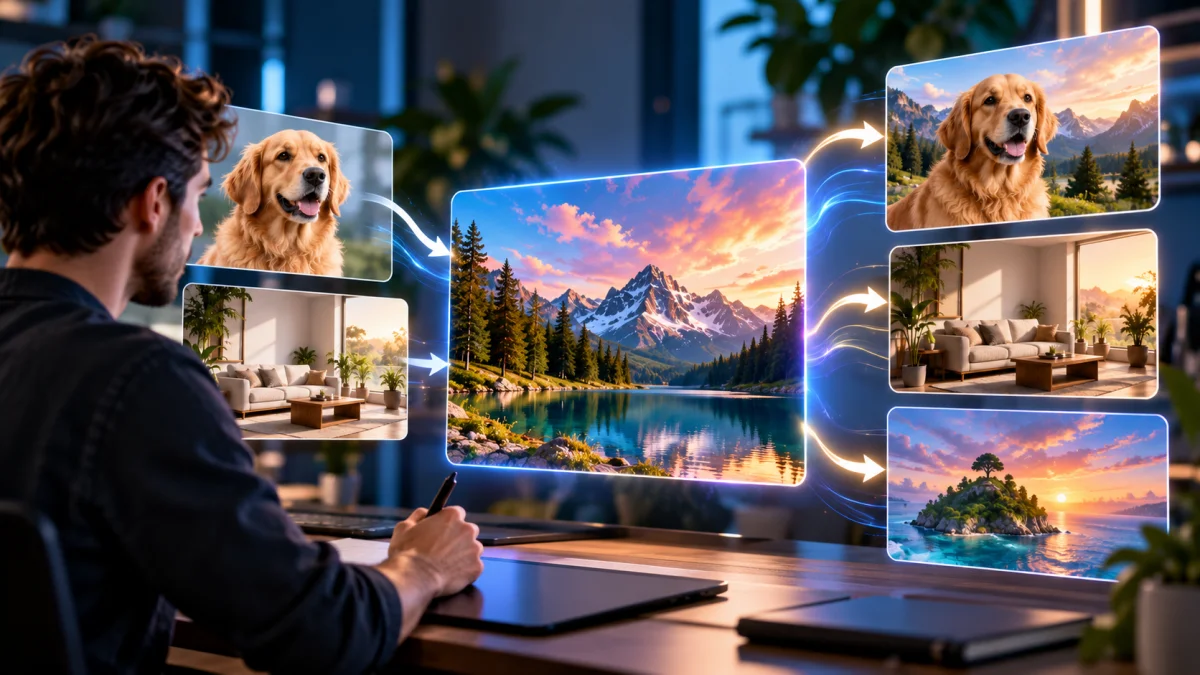
With ChatGPT Images 2.5, an edit can be expressed conversationally: remove one object, preserve a reference subject, change the background or revise visible copy. OpenAI documents improvements to multi-turn preservation, although each resulting asset still needs inspection. That is useful when the user already knows what must change and what must remain stable. The conversational interface makes the revision feel like a design handoff rather than a new prompt from scratch.
Midjourney’s Edit Model documentation describes natural-language edits, up to four reference images, inpainting and outpainting for versions 8.1 and 8.2. Its variations, remix, style guidance and parameters offer additional creative exploration, so the product is not limited to rerolling images. This can be a better fit for designers who think by comparing options rather than by specifying one exact revision in prose.
Neither approach removes the need for inspection. Repeated edits can introduce unintended changes, and variation workflows can drift away from the original requirement. For production assets, always check protected details after every revision instead of assuming an edit preserved them automatically.
Text and layout: where exact visible copy changes the decision
Visible text changes the stakes because spelling, punctuation, hierarchy, and placement can make an otherwise attractive image unusable. Current comparison sources consistently favor ChatGPT as the safer starting point when exact copy is part of the deliverable, especially for posters, social graphics, simple promotional visuals, labels, or mockups.
That does not mean generated typography should be trusted blindly. Every final image still needs a human check for spelling, missing words, duplicated letters, broken line breaks, incorrect logos, or subtle substitutions. If the text is legally sensitive, brand-critical, or central to a product interface, a deterministic design tool may still be preferable for the final compositing step.
Midjourney can create text-bearing compositions, but its main strength remains visual direction rather than exact typesetting. If typography is the core requirement, ChatGPT has the more natural workflow. If typography is secondary and the image itself needs stronger mood or stylistic exploration, Midjourney may still be the better starting point.
Creative control: two different kinds of control
It is misleading to say one tool simply has “more control.” They emphasize different control models.
ChatGPT emphasizes instruction control. You describe the scene in natural language, then refine it by stating what to change and what to preserve. This is useful for constrained compositions, product edits, content graphics, and tasks where the image must satisfy a checklist.
Midjourney emphasizes art-direction control. You can steer style, references, composition, variation, and other generation behaviors through a workflow designed around visual experimentation. This is useful when the objective is not one exact answer but a strong set of creative directions.
The difference matters because “control” depends on the job. A marketer asking for a product image with fixed copy, specific object placement, and iterative corrections may feel more in control in ChatGPT. A concept artist comparing multiple reference-led styles may feel more in control in Midjourney.
Which tool is better for common image workflows?
| Workflow | Better default | Why | What to verify |
|---|---|---|---|
| Text-heavy social graphic | ChatGPT | Natural fit for visible copy and direct revisions | Spelling, line breaks, hierarchy, brand elements |
| Concept art or mood exploration | Midjourney | Strong reference-led aesthetic exploration and variation workflow | Whether the result still satisfies required story or product constraints |
| Editing an existing asset | ChatGPT | Conversational change requests make targeted revisions straightforward | Whether protected elements changed unintentionally |
| Campaign visual direction | Midjourney | Fast visual branching helps compare styles and moods | Brand consistency and downstream production feasibility |
| Product mockup with exact constraints | ChatGPT | Instruction-led workflow is better suited to explicit placement and preservation requirements | Product geometry, labels, logos, scale, and text |
| Stylized editorial illustration | Midjourney | Art-direction workflow is well suited to exploring a distinctive visual language | Factual or representational accuracy where relevant |
If your use case sits outside those categories, the best test is simple: decide whether failure means “the image is not aesthetically compelling enough” or “the image did not follow the specification.” Midjourney is often the better first tool for the former. ChatGPT is often the better first tool for the latter.
When using both tools makes more sense
The comparison does not have to end with choosing only one platform. A two-stage workflow can be better when the task contains both open-ended creative exploration and tightly controlled production edits.
For example, you can use Midjourney to explore several campaign directions, identify the composition or mood that works, then use ChatGPT for a more instruction-driven revision workflow around text, layout, object placement, or adaptation. The reverse can also work: use ChatGPT to establish a logically correct concept, then move into a more exploratory visual process when art direction matters more than strict preservation.
The important point is to treat each stage as a separate objective. Do not expect one model to remain best across ideation, editing, typography, and final production merely because it won the first step.
Final decision framework
Choose ChatGPT Images when exact instructions, readable text, iterative edits, and preservation constraints are central to the task. Choose Midjourney when visual ideation, stylized aesthetics, reference-led exploration, and art-direction controls matter more than strict literal compliance.
If both requirements matter, use the tools sequentially instead of forcing one to do everything. And whichever system you choose, inspect the final asset as a production artifact rather than trusting that a visually convincing image is automatically correct.
AiTechJournal evaluates AI tools by separating vendor claims, third-party reports, and editorial analysis. See how we test AI tools and browse the AI tools hub for related reviews and comparisons.